Shade-Loving Perennials for North-Facing Gardens: A Beginner's Comparison
October 30, 2026 - Plant Care
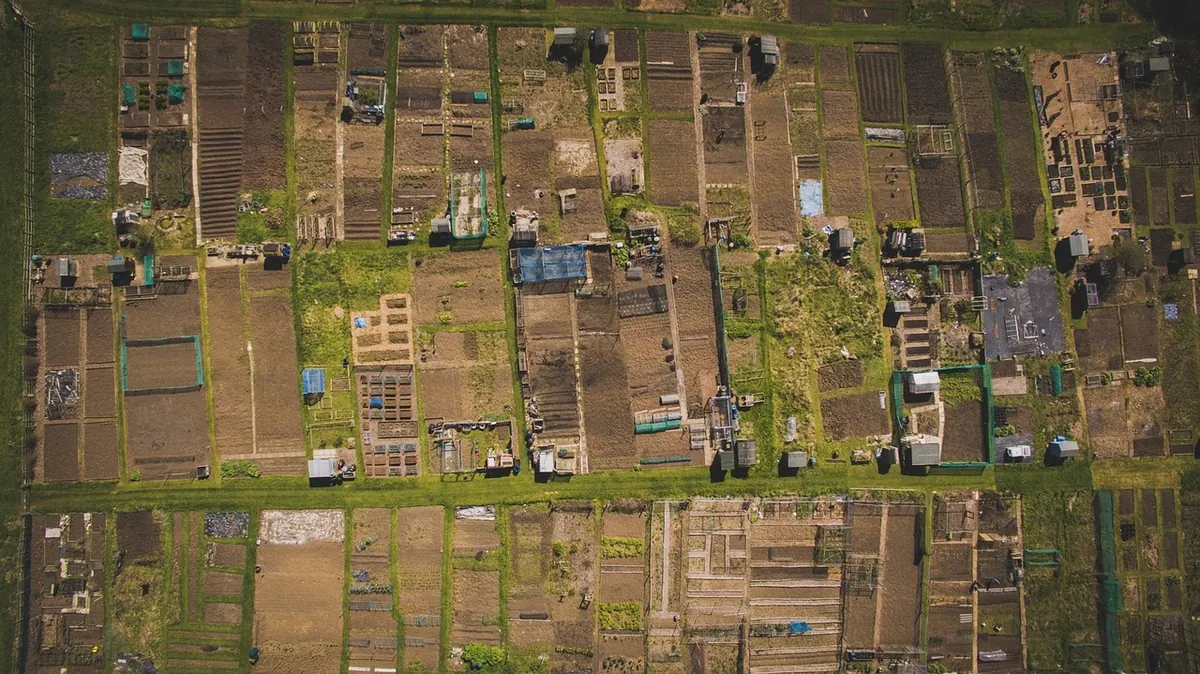
The first thing the plot taught me had nothing to do with seeds. It was that a half plot looks generous in October, when you sign the paperwork and pace out the beds in your head, and positively enormous in June, when every square metre of it is asking for water, feeding and a hoe at once. We took ours on with a borrowed spade, two seed catalogues and a confidence that now looks almost charming.
Twelve months later, we have a shed with a broken latch, a freezer full of beans, and a much clearer idea of what we are doing. Some of it worked. Some of it failed loudly. What follows is an honest account of the first season — the planning, the weeds, the spacing errors, the harvests — and the changes we are making before the next one starts.
Our original plan had eleven crops, a herb spiral and a small seating area. By April it had four crops and a bench made from pallets. That was not laziness; it was arithmetic. A first-year plot needs paths wide enough for a wheelbarrow loaded with manure, and our drawing had given them about forty centimetres. In reality, wet clay soil means a barrow needs room to wobble.
We also ordered far too many seeds. Seed packets are cheap individually and absurd in aggregate, and a single packet of courgette seed will happily fill a household, three neighbours and a church fete. Half of what we bought is still in a tin, unopened. The varieties we did sow, we sowed all at once, which meant a fortnight of more lettuce than anyone could eat followed by two months of none.
The lesson was simple: plan the paths first, then the beds, then the crops. And sow little and often rather than grandly and once.
Nobody warned us about couch grass. People mentioned weeds in the vague way people mention rain. But our plot had clearly been neglected for a couple of seasons, and the couch grass had woven itself through the top fifteen centimetres of soil like a carpet. Every time we dug, we chopped the roots into smaller pieces, each of which was delighted to become a new plant. For a while we were not removing couch grass; we were propagating it.
What changed things was frequency rather than force. Twenty minutes with a hoe on a dry, breezy morning, once a week, killed more weed seedlings than a whole Saturday of furious digging ever did. Let them shrivel on the surface, then rake them up. Small weeds die easily; big ones have already set seed.
Where we could not dig — and there is no shame in admitting that — we covered. Thick cardboard, overlapped generously and weighted with whatever heavy thing was nearest, then topped with compost or woodchip, smothered the worst patches through a whole summer. Underneath, the soil stayed damp, worms moved in, and the roots went pale and easy to pull. We planted squash and courgettes straight through holes in the cardboard the following spring.
Weeds are not a failure of character. They are a sign that bare soil was left in the sun too long.
Seed packet spacing looks wasteful to a beginner. It looks like the packet is assuming you have acres. So we cheated — brassicas at thirty centimetres instead of forty-five, tomatoes at forty instead of sixty — and we paid for it in July, when the plants closed ranks and stopped growing properly. Crowded plants compete for light, water and nutrients, and they stay damp in the middle, which is exactly the condition that invites mildew and rot.
Courgettes were the worst offenders. One plant is a generous gift. Two plants, planted close together, became a thicket we had to crawl into to harvest, and we lost more fruit to rot under the leaf canopy than we ate. This year the courgettes get a metre each and a slab of stone underneath to keep the fruit clean.
Carrots taught the opposite lesson. Thinning feels like vandalism — pulling out healthy seedlings you waited three weeks for — but leaving them packed together gives you a row of thin, twisted roots. Thin early, thin hard, and eat the thinnings.
Plenty of things forgave us. Salad leaves cropped within four weeks of sowing and kept going with regular picking. Runner beans climbed happily and produced until the first cold nights. Chard sulked through the dry spell and then fed us from August to December. Garlic went in during late autumn, sat through the frost without complaint, and came out in July as neat, papery bulbs that hung in the shed for weeks.
The failures were equally instructive: a bed of onions lost to a wet spring and poor drainage, brassicas stripped by pigeons before we thought to net them, and a hopeful row of aubergines that never recovered from a cold June.
The harvests worth repeating, in order of how much joy they delivered per square metre:
If you are taking on a plot this year, resist the urge to plant all of it. Clear and plant a third, cover a third to smother the weeds, and leave a third for paths and the compost heap. Measure your paths before you draw your beds, buy seed in modest quantities, and keep the seed packet's spacing even when it looks extravagant. Expect a glut of something and a total failure of something else; both are normal, and both are useful information.
Our first year was messy, overplanted and far too optimistic. It also gave us beans in the freezer, garlic in the shed and a reason to be outside on a cold Saturday in February. That is a fair return on a season's work, and this time we know where the paths go.
Photo: StockSnap / Pixabay

North-facing gardens are cool and often damp, but the right perennials turn that shade into layered foliage, winter...
A quiet, layered garden with a shallow dish of water, hedges left alone in spring and one scruffy corner can turn a...
Copyright © 2026 Racconti Del Giardino. All Right Reserved.