Shade-Loving Perennials for North-Facing Gardens: A Beginner's Comparison
October 30, 2026 - Plant Care
A north-facing garden can feel like the poor relation of a sunny border, especially in late winter when the light is thin and the soil stays cold. But shade is not one single condition. A north-facing bed against a wall may be dry under the eaves; an open border under a tree may be damp and root-filled; a narrow side passage may be bright but never touched by direct sun. The plants that thrive in these places are not compromises. Hostas, ferns, hellebores and a handful of smaller perennials can give a north-facing garden more texture, colour and seasonal incident than many sunnier spots manage.
The trick is to match the plant to the moisture you actually have, not the moisture you wish you had. Once that is right, height and seasonal interest do the rest.
Spend a week watching the bed before you order anything. Check it in early morning, at midday and in late afternoon. North-facing gardens often receive a slice of direct sun in summer, either early or late, and that small difference matters. A bed that gets two hours of morning sun will suit a wider range of plants than a passage that never sees direct light.
Then feel the soil. Push your hand down about 10 cm after a dry spell. If it is dusty and loose, you are gardening in dry shade. If it is cool and crumbly, you have average shade. If it sticks to your fingers, you have damp shade. Also look up: dense tree roots and overhanging eaves create dry pockets even when the rest of the garden is moist. That is why two north-facing borders a few metres apart can need different plant lists.
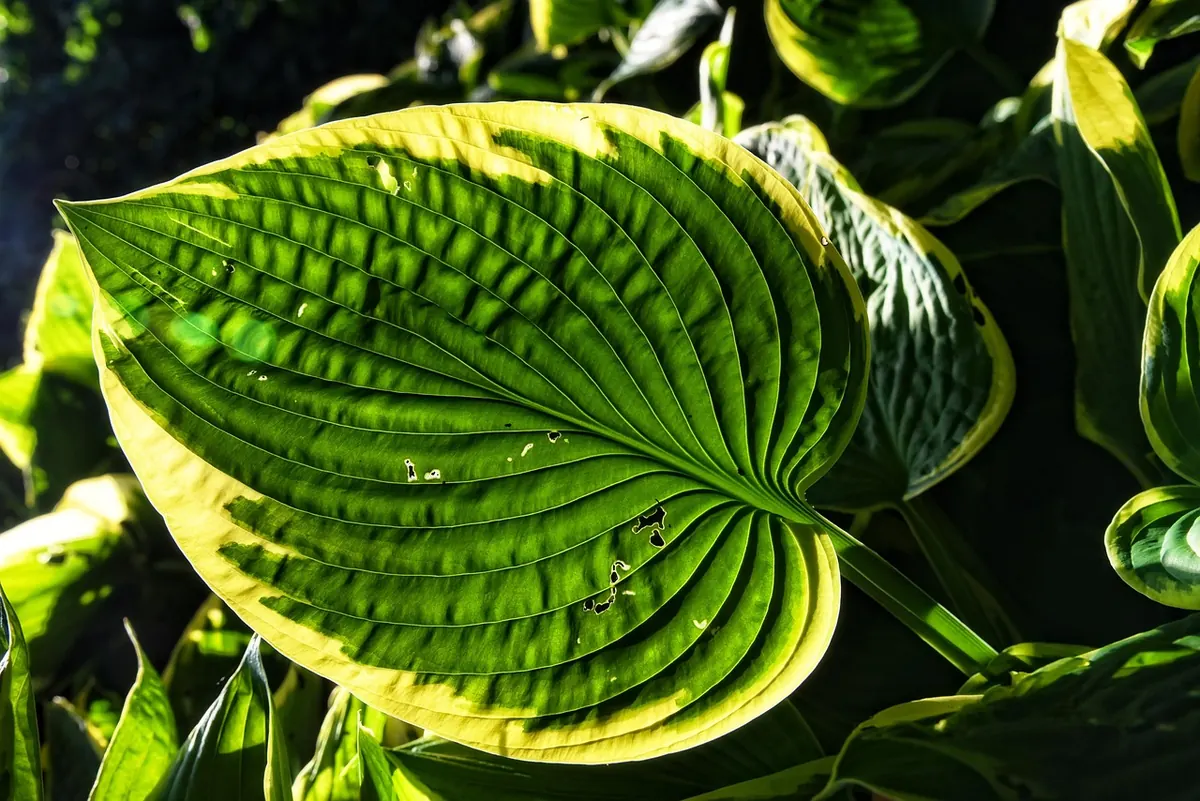
Hostas are the easiest way to add substance to a shady bed. Their leaves emerge in spring in shades of blue, gold and green, and by early summer they knit together into a dense ground cover that suppresses weeds. Flowers follow in summer, usually lavender or white, and are useful for bees. Heights vary enormously: small cultivars such as ‘Golden Tiara’ stay around 25–30 cm, while large forms like ‘Sum and Substance’ can reach 80–90 cm. Blue-leaved ‘Halcyon’ sits in the middle and holds its colour well in shade.
Hostas want average to moist soil, but they do not want to sit in waterlogged ground. Plant the crown at soil level, not buried, and water well through the first summer. The main drawback is slugs and snails, especially in damp north-facing beds. Start control early in spring, when the first shoots appear, rather than waiting for shredded leaves. A mulch of compost helps, but keep it clear of the crowns. Divide congested clumps in early spring as the new shoots push through.
Ferns are the backbone of many north-facing gardens because they look good without flowers. The male fern, Dryopteris filix-mas, tolerates drier shade once established and reaches roughly 60–90 cm. Soft shield fern, Polystichum setiferum, is evergreen in mild winters and gives structure when little else is up. The Japanese painted fern, Athyrium niponicum var. pictum, is smaller, around 30–45 cm, with silver and burgundy tones, but it prefers more moisture than the others.
Most ferns appreciate compost and a cool root run, but they resent heavy feeding. Cut back old fronds in late winter or early spring, before the fiddleheads unfurl, so the new growth is not hidden by tired foliage. If a fern looks crowded, lift and divide it in spring. Ferns also mix well with hostas: the fine texture breaks up the broad leaves and hides the bare soil that hostas leave in early spring.
Hellebores earn their place for winter and early spring interest. Helleborus niger, the Christmas rose, can flower around midwinter in sheltered spots, while the Lenten rose hybrids, Helleborus × hybridus, open from late winter into spring in white, pink, purple and near-black. They are roughly 30–45 cm tall, with evergreen foliage that remains useful through the year.
They prefer average, well-drained soil and tolerate dryish shade once established, but they dislike winter waterlogging. Plant them with the crown just at the surface and avoid burying the growing point. In late winter, cut away the oldest leaves so flowers are visible and air moves around the crown; this also helps reduce the leaf-spot problems that can spoil the foliage. Hellebores are slower to settle than hostas, so give them a year before expecting much. They are not the fastest plants in the garden, but they are among the most reliable.
Around the larger perennials, use low plants to cover soil and extend the season. Epimedium is one of the best for dry shade under trees, growing about 20–30 cm tall with delicate spring flowers and handsome foliage. Tiarella, the foam flower, prefers moisture and stays around 15–30 cm, with frothy spring flowers and leaves that often colour in winter. Pulmonaria brings early flowers for bees and spotted foliage at around 25–40 cm. Brunnera macrophylla ‘Jack Frost’ has silver leaves and forget-me-not flowers in spring, reaching roughly 30–60 cm in moist soil. Heuchera adds foliage colour, but it needs reasonable drainage, so keep it out of the wettest corners.
Use the list as a starting point, not a rulebook. Cultivars vary, and a plant that sulks in one north-facing bed may thrive in another with slightly better drainage or a little more light.
Clear weeds, fork in a bucket or two of compost per square metre, and plant in layers: ferns and larger hostas toward the back, hellebores and brunnera in the middle, epimedium and tiarella at the front. Water deeply once a week in the first summer if rain is scarce, and mulch 5–8 cm deep, keeping mulch away from crowns and stems. Do not feed heavily; shade plants in cool soil grow steadily rather than fast, and too much richness encourages soft growth that slugs enjoy.
Check slug activity in early spring, cut old hellebore leaves in late winter, and tidy fern fronds before the new croziers appear. After a full year, look at what has filled out and what has struggled, then move one or two plants rather than replanting the whole bed. North-facing gardens reward patience. Give the plants the right moisture and a little room, and the shade becomes the point, not the problem.
Photo: MabelAmber / Pixabay
A quiet, layered garden with a shallow dish of water, hedges left alone in spring and one scruffy corner can turn a...
A first-year allotment holder reflects on overambitious plans, couch grass, tight spacing and small harvest...
Copyright © 2026 Racconti Del Giardino. All Right Reserved.